

『Insertion Type Flow Meter: Economical Sensor Probes for Large-Diameter Pipes』Related information(v cone flow meter|rotary gas meter|gallon meter|gear meter|metal tube rotameter|glass tube rotameter|nutating disk meter|transit time ultrasonic flow meter|wedge flow meter|pd meters|hydraulic flow meter|ultrasonic water flow meter|water flow meter|air flow meter|magnetic water flow meter|oxygen flow meter|gas flow meter|argon flow meter|air velocity meter|gasoline flow meter|fuel flow meter|ultrasonic water meter|digital water meter|nitrogen flow meter|solid flow meter|Oxygen tank flow meter|digital water flow meter|diesel fuel flow meter|steam flow meter|02 flow meter|compressed air flow meter|oil flow meter|liquid flow meter)

Insertion Type Flow Meter: Economical Sensor Probes for Large-Diameter Pipes
Quick Answer
Insertion flow meters cut hardware cost on pipe sizes above DN200. A small probe senses flow velocity at a strategic point inside the pipe. You get repeatable measurement at 60 to 80 percent less cost than an inline meter. Silver Instruments ships pre-configured insertion electromagnetic, vortex, and thermal mass probes for water, chemicals, air, gas, and steam.
Why an insertion probe wins when pipe diameter grows
Full-bore flow meters need a body the same size as the pipe. A DN500 Coriolis or electromagnetic meter weighs hundreds of kilograms. The flange, the housing, the liner, the packing and the freight all add cost. Many engineers forget freight. A full-bore DN600 meter shipped from China to a desalination plant in Saudi Arabia can cost more to move than to buy.
An insertion meter replaces that full body with a small sensor tip that goes into the pipe through a welded boss or a ball valve. The electronics stay outside. The wetted part is a short probe, often half a meter long, that sees the flow at a representative point. You buy a few kilograms of stainless steel and a smart transmitter, not a hundred kilograms of flanged pipe.
We see this on customer sites many times. A water utility in Vietnam needed to monitor raw water flow in a DN900 concrete pipe. A full-bore magmeter was out of the question. Our insertion electromagnetic probe with hot-tap ball valve was installed while the pipe ran. The total cost, including on-site welding and the isolation valve, was about USD 1,400. A full-bore DN900 meter in rubber-lined steel would have been over USD 12,000.
Which insertion flow meter fits your medium
Silver Instruments offers three insertion types. Each fits a different set of fluids, and we help you pick the right one before you send a PO.
Insertion electromagnetic flow meter. For conductive liquids. Minimum conductivity 20 µS/cm. Works on raw water, wastewater, cooling water, pulp stock, slurries, corrosive chemicals if the electrode material matches. No moving parts. Accuracy typically ±1.5% of reading from 0.2 m/s up to 10 m/s. Temp range –20 °C to 120 °C with PTFE lining on the probe tip. Outputs 4-20 mA, pulse, RS485. ATEX Zone 1 certified version available for petrochemical plants in Malaysia or Nigeria.
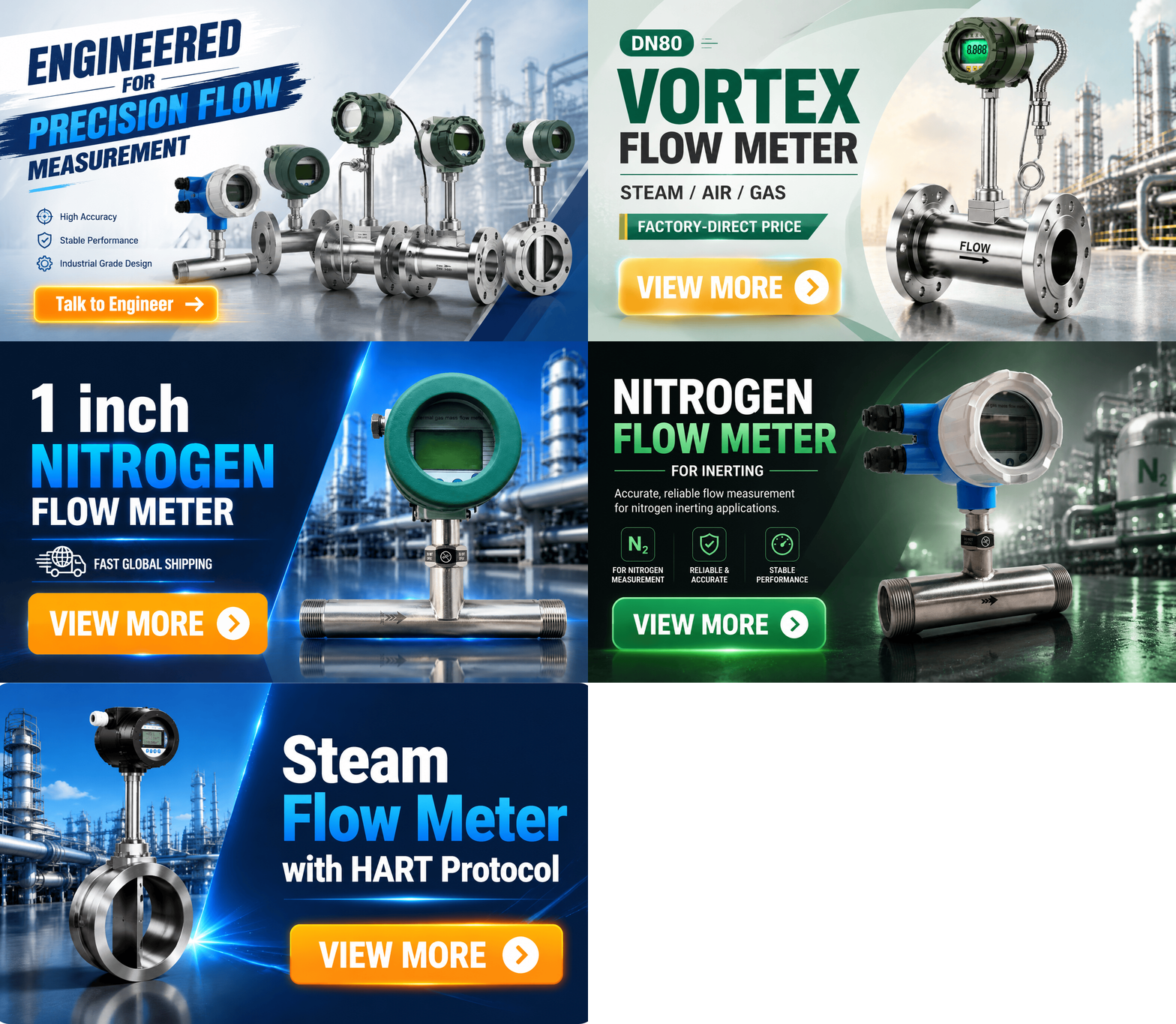
Insertion vortex flow meter. For steam, compressed air, natural gas, and clean low-viscosity liquids. Not for dirty water or slurries. A blunt body in the probe generates vortices, counted by a piezoelectric sensor. Turn-down ratio as high as 1:30. Accuracy ±1.5% for liquids, ±2% for gas and steam. Direct mass flow for steam with built-in temperature and pressure compensation. We ship to breweries in Mexico for steam metering and to natural gas distribution skids in the Middle East.
Insertion thermal mass flow meter. For dry air, nitrogen, CO₂, biogas, natural gas, and aeration air. Two RTD elements measure the heat loss from the heated sensor to the flowing gas. No need for separate temperature and pressure sensors to get mass flow. Range 0.3 Nm/s to 120 Nm/s. Accuracy ±1% of reading above 50% of full scale. We see heavy use in aeration lanes at wastewater plants in Indonesia and compressed air audits at automotive parts factories in Thailand.
Installation facts you need to know
An insertion meter needs enough straight run. The usual rule is 15 diameters upstream and 5 diameters downstream for electromagnetic and thermal. Vortex probes ask for more, up to 25D upstream when there is an elbow or a control valve close by.
_600x400.jpg)
The probe tip should sit at a depth where the velocity represents the mean flow. For fully developed turbulent flow, the mean velocity point is about 0.12 × pipe inner diameter from the wall. Our electronics let you enter the pipe internal diameter and the insertion depth during commissioning. The transmitter then computes a flow rate correction factor.
Hot-tap insertion is the big advantage. You weld a ball valve and a threaded nipple onto the pipe while it runs. You insert the probe through the valve under pressure. A desalination plant in Chile used this method on a DN700 brine line. No shutdown, no draining, no lost production. The mechanical installation took one technician half a day.
How we help you size it right
Send us your pressure in bar, temperature in °C, pipe size in DN, and the fluid name. We reply with a recommended probe type, wetted material, and insertion depth for your nominal flow range. For steam we need the pressure and temperature to know whether it is saturated or superheated. For gas we need the approximate molecular weight or the gas composition. Give us the pipe schedule or wall thickness if you can. The insertion hardware needs to fit the boss or valve thread standard, BSP or NPT. Silver Instruments supplies both.
Most orders for standard insertion flow meters ship within 5 working days from our Nanjing workshop. Express to Singapore, Dubai, or São Paulo takes 3 to 5 days. We include a calibration certificate matched to your flow range, traceable to national standards. No extra charge for that.
Get your quote. Email us at [email protected], call +86-135-1213-1526, or message on WhatsApp at 86-135-12131526. WeChat: +86 13512131526. Mention your DN size, fluid, temperature, and pressure, and we will get back to you with a price and a lead time, usually the same day.
FAQ
Can I install an insertion flow meter without stopping the process? Yes, with a hot-tap assembly. You weld a ball valve onto the pipe, mount the probe through the valve, and open the valve to insert. Many customers in oil and gas and water treatment use this method on lines up to 40 bar.
What is the smallest pipe that makes economic sense for an insertion meter? We usually draw the line at DN200. Below that, a standard inline meter costs about the same once you price the valve, the boss, and the assembly time. Between DN200 and DN250, insertion still works if you need hot-tap capability or very low pressure drop.
Can the insertion electromagnetic meter handle chemical fluids? Yes. We offer Hastelloy C electrodes and PFA or PTFE lined probe tips for aggressive chemicals. The conductivity must be above 20 µS/cm. Many acids, caustic solutions, and salt brines work. Tell us the chemical name and concentration and we check the compatibility chart for you.
How often does the probe need cleaning? In clean water or gas, almost never. In raw sewage, pulp stock, or sticky fluids, the probe tip can collect debris over months. A visual inspection every 12 months is common. Many customers add a manual ball valve to retract and clean the probe without service interruption.
Do you supply the insertion fitting and valve along with the meter? Yes. Silver Instruments ships a complete kit: probe, transmitter, connection head, and if specified, a ball valve with hot-tap nipple in the thread standard you need. You just weld or thread it into the pipe boss. We also offer a portable insertion flow meter with a battery-powered data logger for temporary flow surveys.
 Hot News
 Related AD