

『Electromagnetic Flow Meter Advantages and Disadvantages: A Complete Comparison』Related information(v cone flow meter|rotary gas meter|gallon meter|gear meter|metal tube rotameter|glass tube rotameter|nutating disk meter|transit time ultrasonic flow meter|wedge flow meter|pd meters|hydraulic flow meter|ultrasonic water flow meter|water flow meter|air flow meter|magnetic water flow meter|oxygen flow meter|gas flow meter|argon flow meter|air velocity meter|gasoline flow meter|fuel flow meter|ultrasonic water meter|digital water meter|nitrogen flow meter|solid flow meter|Oxygen tank flow meter|digital water flow meter|diesel fuel flow meter|steam flow meter|02 flow meter|compressed air flow meter|oil flow meter|liquid flow meter)

Electromagnetic Flow Meter Advantages and Disadvantages: A Complete Comparison
Quick Answer: Electromagnetic flow meters provide accurate volumetric flow measurement for conductive liquids such as water, wastewater, acids, slurries, and seawater. They cannot measure oil, gas, steam, or deionized water with very low conductivity. For most water and chemical processes, a Silver Instruments magmeter delivers long service life and low maintenance.
Silver Automation Instruments supplies electromagnetic flow meters to plants in Southeast Asia, Oceania, Latin America, Africa, and the Middle East. This comparison covers the main advantages, the main disadvantages, and the application limits that engineers and purchasing teams should check before selecting a meter.
Where Do Electromagnetic Flow Meters Work Best?
These meters measure volumetric flow based on liquid conductivity. Any conductive liquid above the minimum threshold can be measured. Common applications include raw water intake, wastewater discharge, dosing of sodium hydroxide, flow of paper pulp, and seawater feed in desalination plants. A paint manufacturer in Vietnam needed a DN50 meter for water-based paint. Because the paint had enough conductivity, a PTFE lined magmeter worked well.
What Are the Main Advantages of Electromagnetic Flow Meters?
The lack of moving parts in the flow tube is the biggest mechanical advantage. There is no rotor wear, no bearing replacement, and no clogging from sludge or sand. We have seen this on customer sites many times in Indonesia and Nigeria where river water carries fine silt. The maintenance team spends less time on service.
Accuracy is another strong point. A standard Silver Automation Instruments electromagnetic flow meter achieves plus or minus 0.2 percent of reading for DN25 to DN2000. That is enough for water billing, chemical batching, and pump station control. Output options include 4-20 mA HART, pulse, and Modbus RTU. Operators integrate the output with PLC and SCADA systems without extra signal converters.
There is no pressure drop from an orifice or a turbine rotor. That helps on low pressure gravity lines. Viscosity up to 500 cP normally does not affect the reading. Bi-directional flow measurement is included in most converters. A single meter can handle flow in both directions without extra hardware.
Liner and electrode options cover many aggressive fluids. PTFE liner suits acids and caustic. Neoprene liner suits water and wastewater. Electrode choices include 316L, Hastelloy C, titanium, and tantalum. For seawater, 316L electrodes are often acceptable for lower salinity. For high chloride seawater or acid brine, Hastelloy C or titanium lasts longer.
What Are the Main Disadvantages of Electromagnetic Flow Meters?
The biggest limitation is conductivity. An electromagnetic flow meter cannot measure hydrocarbons, gases, steam, or deionized water with conductivity below the required threshold. Most standard models need at least 5 µS/cm. Some high performance models can measure down to 0.1 µS/cm but the signal becomes more sensitive to noise. If the process liquid is diesel, lube oil, or air, choose a Coriolis mass flow meter or a vortex flow meter instead.
Temperature and pressure limits must be checked. A standard PTFE liner handles up to 150 °C. PFA liners can handle about 180 °C. Standard wafer and flanged models handle up to 40 bar. High pressure designs can go higher but cost more. At a desalination plant in Saudi Arabia, we sized a DN300 PN16 seawater meter because the line pressure stayed below 16 bar and the temperature stayed below 60 °C.
Electromagnetic flow meters need a good grounding system. For metal pipes, grounding rings or g
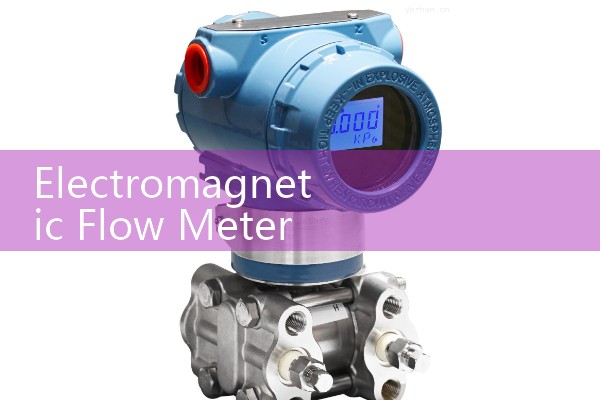
Large meters are heavy. A DN600 flanged magmeter can weigh several hundred kilograms. Pipe supports and lifting equipment must be planned during installation. The weight is not a problem for small DN15 to DN50 chemical dosing skids but matters for large water lines.
Initial cost is higher than a turbine meter or a variable area meter in very small line sizes. But the total cost of ownership is often lower because there are no moving parts to replace.
How Do Electromagnetic Flow Meters Compare With Other Flow Meter Types?
Ultrasonic meters can lose signal in high solids or rough pipe walls. A magmeter is often more stable in wastewater with high solids or bubbles. A Coriolis mass flow meter measures mass, not volume. So if the process needs kg/h for batching or custody transfer, a Silver Instruments Coriolis mass flow meter is the better fit. A vortex flow meter works well for steam and gas. A magmeter works better for slurries and conductive liquids.
Which Models Fit Common Industrial Applications?
For chemical dosing in skids, use a Silver Instruments DN15 to DN50 electromagnetic flow meter with PTFE liner and 4-20 mA HART output. For water and wastewater pump stations, a DN50 to DN600 rubber lined model with 316L electrodes covers most applications. For hazardous areas, specify ATEX Zone 1 and a remote converter. If temperature compensation is required, add a PT100 sensor input. For seawater feed in a desalination plant, specify DN150 to DN600 with PTFE or neoprene liner and titanium electrodes depending on salinity. For pulp and paper stock, use a high solids design with ceramic liner or polyurethane liner.
How to Request a Quote
Send us your pressure (bar), temperature (°C), pipe size (DN), and flow range. Also tell us the liquid type, conductivity, solids content, viscosity, and required output. We will reply with a quotation and a data sheet within 24 hours. Contact Silver Automation Instruments: Tel: +86-135-1213-1526, Whatsapp: 86-135-12131526, WeChat: +86 13512131526. Web: flow-meter.com.au
FAQ
What is the minimum conductivity for an electromagnetic flow meter?
Most standard models need at least 5 µS/cm. High performance models can measure down to 0.1 µS/cm. Below that value, the signal is too weak and the meter becomes unstable.
Can an electromagnetic flow meter measure oil or diesel?
No. Oil, diesel, gasoline, gas, and steam are non-conductive. Use a Coriolis mass flow meter or a positive displacement flow meter for these fluids.
What is the typical accuracy of an electromagnetic flow meter?
A standard Silver Instruments model achieves plus or minus 0.2 percent of reading for DN25 to DN2000. Special calibration can improve repeatability for batching applications.
Does an electromagnetic flow meter need straight pipe length?
Yes. Most installations use 5D upstream and 3D downstream. If the meter is near a pump, an elbow, or a control valve, use 10D upstream to stabilize the flow profile.
How do I choose between an electromagnetic flow meter and a Coriolis mass flow meter?
If the liquid is conductive and the process needs volumetric flow, a magmeter is usually lower cost. If the process needs mass flow in kg/h or the liquid is non-conductive, choose a Coriolis mass flow meter from Silver Instruments.
 Hot Product
 Related AD