

『Electromagnetic Flow Meter Principle: Faradays Law of Induction Fluid Basics』Related information(v cone flow meter|rotary gas meter|gallon meter|gear meter|metal tube rotameter|glass tube rotameter|nutating disk meter|transit time ultrasonic flow meter|wedge flow meter|pd meters|hydraulic flow meter|ultrasonic water flow meter|water flow meter|air flow meter|magnetic water flow meter|oxygen flow meter|gas flow meter|argon flow meter|air velocity meter|gasoline flow meter|fuel flow meter|ultrasonic water meter|digital water meter|nitrogen flow meter|solid flow meter|Oxygen tank flow meter|digital water flow meter|diesel fuel flow meter|steam flow meter|02 flow meter|compressed air flow meter|oil flow meter|liquid flow meter)

Electromagnetic Flow Meter Principle: Faradays Law of Induction and Fluid Basics
Quick Answer: An electromagnetic flow meter works on Faradays Law of induction. A magnetic field is applied across a pipe. When conductive liquid moves through this field, it creates a voltage signal proportional to flow rate. Silver Automation Instruments builds magmeters from DN15 to DN3000 for water, chemicals, food products and wastewater. For a specific price and model recommendation, send your pipe size (DN), flow range, fluid conductivity, pressure and temperature to [email protected].
How the Magnetic Field Generates a Flow Signal
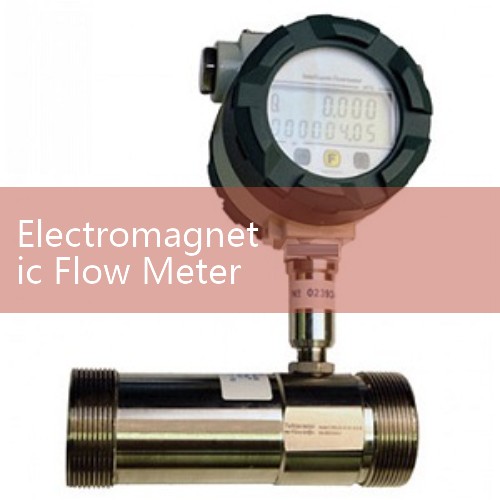
The core physics is direct. Two field coils outside the flow tube produce a constant magnetic field. As the fluid passes through the pipe at 90 degrees to the magnetic field lines, a small voltage is induced. The meter electrodes on the pipe wall pick up this voltage. The voltage amplitude equals B x D x v, where B is magnetic flux density, D is the conductor length (basically the pipe inner diameter) and v is average flow velocity. Internal electronics condition the tiny signal and convert it into a volume flow reading. No moving parts sit in the flow stream, so pressure loss is close to zero.
Most engineers skip the textbook derivation and jump straight to the practical requirement: the liquid must be electrically conductive. A magmeter cannot measure pure oil, demineralised water with conductivity below 5 µS/cm or any non-conductive fluid. In practice, we recommend at least 20 µS/cm for a stable, noise-free signal. Tap water, seawater, acids, slurries and food liquids like milk or beer all meet this threshold. A dairy plant producing yoghurt typically has conductivity above 4 mS/cm, so electromagnetic metering works perfectly with sanitary tri-clamp connections and CIP cleaning cycles.
Concrete Details on Liner and Electrode Selection
Because the electrodes are in direct contact with the fluid, material selection decides meter lifespan. Silver Automation Instruments specifies 316L stainless steel for clean water, Hastelloy C for diluted acids and alkalis, titanium for continuous seawater service and tantalum for strong acids like concentrated sulfuric acid. Liner material is equally important. We use hard rubber for general water and wastewater, PTFE or PFA for aggressive chemicals and high-temperature fluids up to 180 °C. One of our customers, a caustic soda plant in Thailand, runs DN50 PTFE-lined meters with Hastelloy C electrodes for 20% NaOH at 90 °C. The meters have been in service for 4 years with no liner swelling or electrode corrosion. This level of detail is standard for our pre-sales engineering. You tell us the chemical name, concentration and temperature, and we pick the right wetted materials.
Common Installation Errors You Can Avoid
An electromagnetic flow meter needs a fully filled pipe at all times. Partially full pipes cause the electrode signal to drop out, giving zero or erratic readings. Install the meter in a low point of the pipeline o
Output Signals and Plant Integration
On the electronics side, Silver Instruments offers 4-20 mA with HART, pulse, and RS485 Modbus RTU. A wastewater treatment plant in Peru integrated 12 of our DN300 magmeters with a SCADA system using 4-20 mA HART, pulling instantaneous flow and totalized volume every second. The local integrator needed Modbus address mapping, and we supplied the register table during FAT. If your DCS or PLC expects a specific protocol, mention it when you request a quote. We pre-configure outputs before shipment.
Frequently Asked Questions
What is the absolute minimum fluid conductivity for a magmeter?
The meter needs at least 5 µS/cm. Below that value the signal-to-noise ratio degrades fast. For safe operation, aim for 20 µS/cm or higher. Pure solvents and most hydrocarbon fuels fall below this limit and require a different flow technology.
Can this flowmeter handle bidirectional flow?
Yes. Silver Automation Instruments electromagnetic flowmeters are bidirectional as standard. The primary display shows positive and negative flow rates, and the totalizer accumulates in both directions separately if you activate that function in the setup menu.
What liner is recommended for drinking water?
EPDM rubber or PTFE with WRAS, NSF, or local potable water certification works for drinking water. We supply certified liners for municipal water networks. Specify the required standard when ordering.
Do I need straight pipe for insertion or in-line models?
Both types prefer a stable velocity profile. For inline flanged meters, 5D upstream and 3D downstream is a safe baseline. Insertion probes in large pipes often need up to 10D upstream. We confirm the exact recommendation based on your piping isometric during the sizing stage.
How do I get a price for a DN80 seawater flow meter with HART?
Send us the seawater temperature, operating pressure (bar), pipe size (DN), minimum and maximum flow range, and required flange standard (ANSI, EN, JIS). One email to [email protected] with these parameters is enough for us to return a formal quotation within one working day. You can also call +86-135-1213-1526 or message us on WhatsApp at 86-135-12131526. Our WeChat number is +86 13512131526. We reply in English, Spanish and Portuguese.
 Hot Product
 Related AD