

『lanolin oil flow meter』Related information(v cone flow meter|rotary gas meter|gallon meter|gear meter|metal tube rotameter|glass tube rotameter|nutating disk meter|transit time ultrasonic flow meter|wedge flow meter|pd meters|hydraulic flow meter|ultrasonic water flow meter|water flow meter|air flow meter|magnetic water flow meter|oxygen flow meter|gas flow meter|argon flow meter|air velocity meter|gasoline flow meter|fuel flow meter|ultrasonic water meter|digital water meter|nitrogen flow meter|solid flow meter|Oxygen tank flow meter|digital water flow meter|diesel fuel flow meter|steam flow meter|02 flow meter|compressed air flow meter|oil flow meter|liquid flow meter)
 Of course. Here is an article about lanolin oil flow meters, written in English, covering their importance, challenges, and selection criteria.
---
### The Precision Challenge: Selecting the Right Flow Meter for Lanolin Oil
In the intricate world of industrial processing, measuring the flow of a substance as unique as lanolin oil presents a distinct set of engineering challenges. Lanolin, a waxy, water-repellent secretion from sheeps skin, is a valuable byproduct of the wool industry, prized in cosmetics, lubricants, and rust-preventative coatings. However, its physical properties—namely its high viscosity, tendency to crystallize, and thixotropic behavior—make accurate flow measurement a critical hurdle that demands specialized instrumentation.
The core difficulty with lanolin oil lies in its rheology. At room temperature, lanolin is a semi-solid paste with a viscosity that can be thousands of centipoise (cP). To make it pumpable, it must be heated to temperatures often exceeding 40-50°C (104-122°F). Furthermore, lanolin is thixotropic, meaning its viscosity decreases under shear stress (from pumping or agitation) and recovers over time when at rest. A flow meter that works perfectly for water or light oils will fail miserably here, as it can be clogged, damaged by high pressure drop, or provide wildly inaccurate readings due to slippage or stagnation.
Given these challenges, several flow meter technologies have proven effective for lanolin oil, each with specific trade-offs.
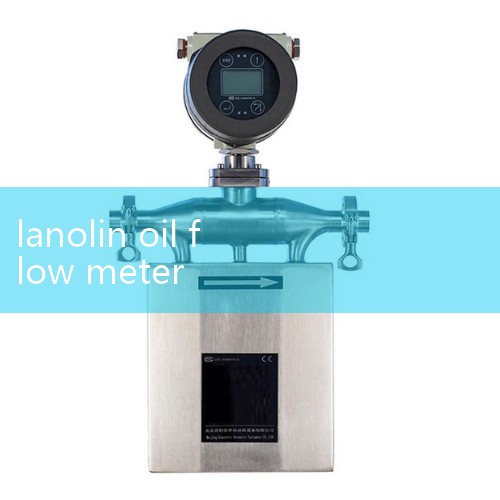
**1. Coriolis Mass Flow Meters: The Gold Standard**
For the most demanding applications requiring high accuracy (often ±0.1% to 0.2%), the Coriolis meter is the top choice. It measures mass flow directly, making it immune to changes in viscos
 Hot Product
 Related AD