

『0.03 ml pulse flow meter』Related information(v cone flow meter|rotary gas meter|gallon meter|gear meter|metal tube rotameter|glass tube rotameter|nutating disk meter|transit time ultrasonic flow meter|wedge flow meter|pd meters|hydraulic flow meter|ultrasonic water flow meter|water flow meter|air flow meter|magnetic water flow meter|oxygen flow meter|gas flow meter|argon flow meter|air velocity meter|gasoline flow meter|fuel flow meter|ultrasonic water meter|digital water meter|nitrogen flow meter|solid flow meter|Oxygen tank flow meter|digital water flow meter|diesel fuel flow meter|steam flow meter|02 flow meter|compressed air flow meter|oil flow meter|liquid flow meter)
 **Title: Precision in Miniature: The 0.03 ml Pulse Flow Meter**
In the world of fluid measurement, precision often scales inversely with size. As industries push toward miniaturization—from medical devices to micro-reactors—the demand for accurate, reliable flow measurement at extremely low volumes has never been greater. Enter the 0.03 ml pulse flow meter, a device designed to measure and control fluid volumes as small as 30 microliters with remarkable accuracy.
**What Is a Pulse Flow Meter?**
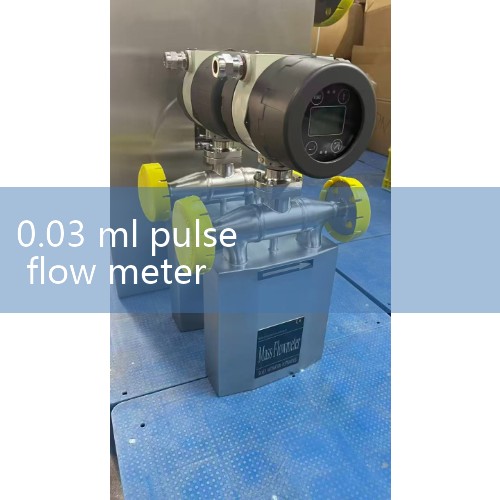
A pulse flow meter operates on a simple yet effective principle: each pulse generated by the meter corresponds to a fixed volume of fluid passing through it. By counting these pulses, the total flow can be calculated. Unlike continuous analog meters, pulse meters offer digital precision, making them ideal for applications where every drop matters. The “0.03 ml” designation means that each pulse represents a volume of 0.03 milliliters (or 30 microliters). This extremely fine resolution allows the meter to detect and quantify minuscule amounts of liquid with high repeatability.
**How Does It Work?**
Most 0.03 ml pulse flow meters employ a positive displacement mechanism. Inside the meter, a small chamber fills and empties cyclically as fluid flows through. A common design uses a rotating impeller or a piston that moves with each volume increment. A magnetic or optical sensor detects each cycle and generates an electrical pulse. Because the chamber volume is precisely calibrated—often to within ±1% or better—the pulse count directly translates to an accurate volume measurement. The compact size of the chamber enables the 0.03 ml resolution, while the pulse output allows for easy integration with microcontrollers, PLCs, or data l
**Title: Precision in Miniature: The 0.03 ml Pulse Flow Meter**
In the world of fluid measurement, precision often scales inversely with size. As industries push toward miniaturization—from medical devices to micro-reactors—the demand for accurate, reliable flow measurement at extremely low volumes has never been greater. Enter the 0.03 ml pulse flow meter, a device designed to measure and control fluid volumes as small as 30 microliters with remarkable accuracy.
**What Is a Pulse Flow Meter?**
A pulse flow meter operates on a simple yet effective principle: each pulse generated by the meter corresponds to a fixed volume of fluid passing through it. By counting these pulses, the total flow can be calculated. Unlike continuous analog meters, pulse meters offer digital precision, making them ideal for applications where every drop matters. The “0.03 ml” designation means that each pulse represents a volume of 0.03 milliliters (or 30 microliters). This extremely fine resolution allows the meter to detect and quantify minuscule amounts of liquid with high repeatability.
**How Does It Work?**
Most 0.03 ml pulse flow meters employ a positive displacement mechanism. Inside the meter, a small chamber fills and empties cyclically as fluid flows through. A common design uses a rotating impeller or a piston that moves with each volume increment. A magnetic or optical sensor detects each cycle and generates an electrical pulse. Because the chamber volume is precisely calibrated—often to within ±1% or better—the pulse count directly translates to an accurate volume measurement. The compact size of the chamber enables the 0.03 ml resolution, while the pulse output allows for easy integration with microcontrollers, PLCs, or data l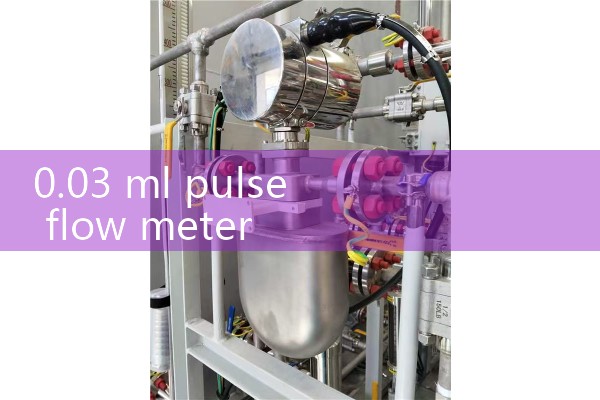
 Hot Product
 Related AD