

『positive displacement flow meter』Related information(v cone flow meter|rotary gas meter|gallon meter|gear meter|metal tube rotameter|glass tube rotameter|nutating disk meter|transit time ultrasonic flow meter|wedge flow meter|pd meters|hydraulic flow meter|ultrasonic water flow meter|water flow meter|air flow meter|magnetic water flow meter|oxygen flow meter|gas flow meter|argon flow meter|air velocity meter|gasoline flow meter|fuel flow meter|ultrasonic water meter|digital water meter|nitrogen flow meter|solid flow meter|Oxygen tank flow meter|digital water flow meter|diesel fuel flow meter|steam flow meter|02 flow meter|compressed air flow meter|oil flow meter|liquid flow meter)

1. May I ask how to translate "vortex flowmeter" in English?
Vortex flowmeter: Vortex flowmeter. Translation of other flowmeters for reference: Electromagnetic flowmeter: Electromagnetic flowmeter. Coriolis mass flowmeter. Open channel flowmeter. Orifice plate flowmeter. Rotary flowmeter: Rotameter. Turbine flowmeter. Calorimetric flowmeter. Volumetric flowmeter. Positive Displacement (PD) flowmeter. Ultrasonic adiabatic flowmeter. Ultrasonic flowmeter. Venturi flowmeter. Thermal Venturi flowmeter. Thermal Mass Flowmeter: Multiphase Flowmeter: Flumes and Weirs Flowmeter: Flumes and Weirs Flowmeter
2 What are the main classifications of flow meters? What are the measurement principles? Generally, there are four types of commonly used flow meters: ① mechanical flow meter, ② electromagnetic flow meter, ③ vortex flow meter, ④ ultrasonic flow meter. ① Mechanical flow meter: commonly known as water meter in daily life, the water meter has a rotating structure inside, and the flowing liquid will cause the structure of the internal fan to rotate. The flow rate and fan speed have a certain proportional relationship, and the faster the rotation speed, the greater the flow through the pipeline. At the same time, some mechanical flow meters can also generate pulse signals to represent flow signals and transmit them to PLC. Mechanical flow meters have mechanical moving parts inside, which are not suitable for sewage or liquids containing impurities such as solids and particles. Excessive impurities can block the fan blades and cause damage to the mechanical flow meter. ② Electromagnetic flowmeter: commonly used in the industrial field, the measured liquid must be water or a conductive liquid. Electromagnetic flowmet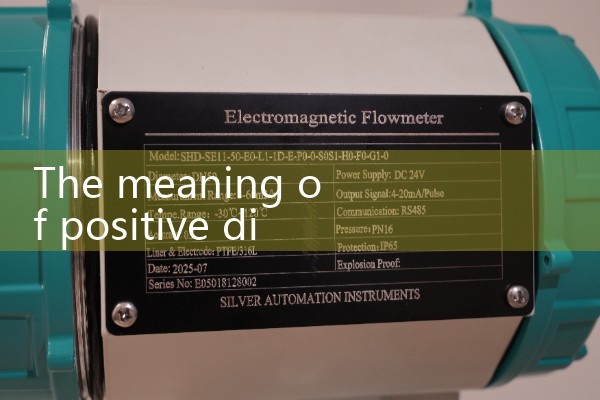
『SILVER Official Website SERVICE』
 Hot Product
 Related AD