

『Hot Wire Air Flow Meter: Thermal Anemometers for Precision Low Velocity Ducting』Related information(v cone flow meter|rotary gas meter|gallon meter|gear meter|metal tube rotameter|glass tube rotameter|nutating disk meter|transit time ultrasonic flow meter|wedge flow meter|pd meters|hydraulic flow meter|ultrasonic water flow meter|water flow meter|air flow meter|magnetic water flow meter|oxygen flow meter|gas flow meter|argon flow meter|air velocity meter|gasoline flow meter|fuel flow meter|ultrasonic water meter|digital water meter|nitrogen flow meter|solid flow meter|Oxygen tank flow meter|digital water flow meter|diesel fuel flow meter|steam flow meter|02 flow meter|compressed air flow meter|oil flow meter|liquid flow meter)
 ```html
Hot Wire Air Flow Meter: Thermal Anemometers for Precision Low Velocity Ducting
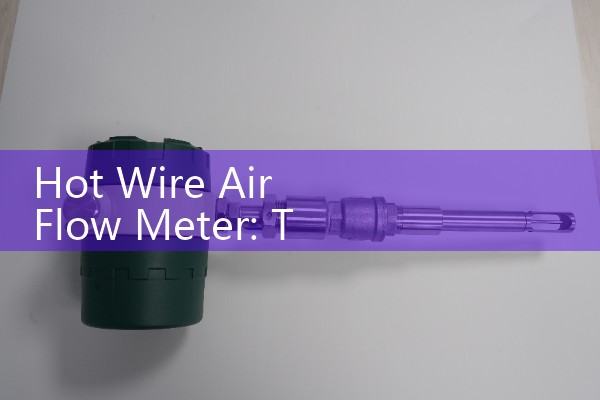
Quick Answer: Hot wire anemometers capture air speeds down to 0.05 m/s in ducts, well below the start-up threshold of vane or Pitot sensors. They deliver ±2% of reading accuracy and a response under 0.2 seconds. Silver Instruments supplies insertion thermal mass flow meters and dedicated hot wire sensors with 4-20 mA HART for HVAC commissioning, cleanrooms, and pharma face velocity loops.
How Hot Wire Air Flow Meters Work in Low Velocity Ducts
A thin platinum or tungsten wire is heated to a constant temperature above the gas stream. As air flows past, it cools the wire. The electronics instantly boost current to hold the set temperature. That current draw maps directly to mass velocity. This is the constant temperature anemometer principle. Our SIL-600 thermal mass flow meter uses a similar constant temperature differential method, but on a rugged RTD sensor pair. For duct velocities below 1 m/s, we configure a special low-speed calibration. Most standard thermal mass flow meters roll off under 0.5 m/s. A hot wire probe does not. We have seen this on customer sites many times. A pharma cleanroom in Jeddah needed to validate laminar hood face velocity at 0.45 m/s ±0.02 m/s. A vane anemometer could not start reliably. The hot wire probe gave them the data for their FDA audit.
Why Thermal Anemometers Outperform Vane and Pitot for Low Speeds
Vane anemometers have a mechanical inertia. They typically stall below 0.3 to 0.5 m/s. Pitot tubes create a differential pressure that shrinks to a few Pascals at low speed. Signal noise drowns the reading. Hot wire sensors have no moving parts and no square root DP extraction. They sense mass flow directly. Output stays clean down to 0.05 m/s. Most engineers skip the spec sheet fine print. In practice, if your duct expects 0.2 m/s, a thermal anemometer is the only tool that works. We keep a 0 to 2 m/s calibration range for such jobs. Accuracy holds at ±(2% of reading + 0.02 m/s).
Typical Applications Where Low Velocity Accuracy Matters
Cleanroom laminar flow cabinets require face velocity monitoring between 0.36 and 0.54 m/s. Paint spray booths in Vietnam often control airflow at 0.2 to 0.5 m/s to contain overspray without disturbing the finish. Museum conservation tunnels run at 0.1 m/s to protect artifacts from drying. A distributor in Mexico asked us for a fixed duct installation with 4-20 mA output for a bakery proofing room. Air there moves at 0.3 m/s. We supplied a SIL-620 hot wire probe with a Ø12 mm insertion tip and a local LED display. It went into a 150 mm round duct. Output was loop-powered 4-20 mA HART. The bakery now has a trend on their PLC.
Selecting a Hot Wire Probe or Thermal Mass Flow Meter for Your Duct
Choose a hot wire anemomete
FAQ
What is the lowest air velocity a hot wire meter can measure?
0.05 m/s. We calibrate from 0 to 2 m/s for cleanroom face velocity jobs. Standard thermal mass flow meters usually need 0.5 m/s or more to start reading.
Can I use a thermal anemometer in dusty ducts?
Dirty air fouls the hot wire surface and shifts calibration fast. A better choice is an insertion thermal mass flow meter with a rugged RTD probe. If you must use a hot wire on mildly dusty air, specify an automatic burn-off cleaning circuit. We can include this on the SIL-620.
How often does a hot wire sensor need recalibration?
Every 12 months is the industry norm. Silicone vapors, oil mist, or cigarette smoke can speed up drift. We offer an in-house calibration service at our Nanjing lab. Ship the probe back and you get it within five working days.
What is the difference between a hot wire anemometer and a thermal mass flow meter for compressed air?
A hot wire anemometer targets low velocity air at near-atmospheric pressure. A thermal mass flow meter like our SIL-600 is built for pressurized lines up to 40 bar and handles a wider 0.3 to 50 Nm/s range. It uses two industrial RTDs, not a fragile wire. If your duct has pressure and you need total consumption in nm3/h, go with the thermal mass flow meter.
What output signals are available from Silver Instruments hot wire probes?
4-20 mA HART is the plant standard. We also supply 0 to 10 V, 0 to 5 V, or Modbus RTU. The 4-20 mA version is loop-powered and needs only two wires. Specify the signal when you request the quote.
For a fixed or handheld low velocity duct flow meter, reach Silver Instruments at [email protected] or call Tel +86-135-1213-1526. WhatsApp and WeChat are available for fast technical support: 86-135-12131526 (WhatsApp), +86 13512131526 (WeChat). More thermal mass flow meter options for ducting are published at https://flow-meter.com.au.
``` Hot News
 Related AD