

『Electromagnetic induction flowmeter』Related information(v cone flow meter|rotary gas meter|gallon meter|gear meter|metal tube rotameter|glass tube rotameter|nutating disk meter|transit time ultrasonic flow meter|wedge flow meter|pd meters|hydraulic flow meter|ultrasonic water flow meter|water flow meter|air flow meter|magnetic water flow meter|oxygen flow meter|gas flow meter|argon flow meter|air velocity meter|gasoline flow meter|fuel flow meter|ultrasonic water meter|digital water meter|nitrogen flow meter|solid flow meter|Oxygen tank flow meter|digital water flow meter|diesel fuel flow meter|steam flow meter|02 flow meter|compressed air flow meter|oil flow meter|liquid flow meter)

Do you know the principle of electromagnetic flowmeter?
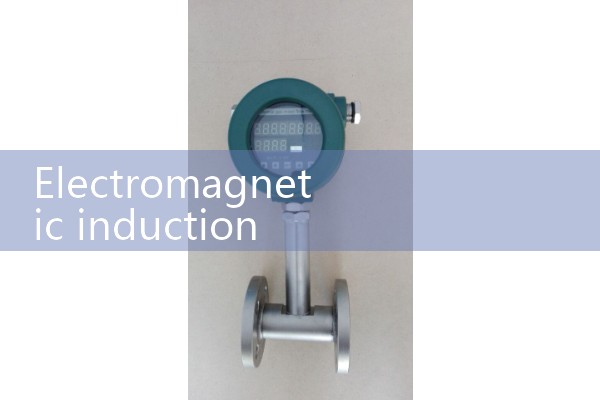
Electromagnetic flowmeter is an instrument for flow measurement based on Faradays law of electromagnetic induction. Its core principles and characteristics are as follows:
1. Working principle Faradays law of electromagnetic induction When a conductive liquid flows vertically in a magnetic field, the charged particles (positive/negative ions) in the liquid will be deflected by the magnetic field, resulting in induced electromotive force (voltage) proportional to the flow velocity on both sides of the pipeline.
. The formula is expressed as: E=B × L × vE: Induced electromotive force (voltage) B: Magnetic field strength L: Inner diameter of the pipeline (electrode spacing) v: Average flow velocity of the liquid. By measuring the induced electromotive force E and combining it with known B and L, the liquid flow velocity v can be calculated, and then the volumetric flow rate can be converted from the cross-sectional area of the pipeline. Structural composition of measuring tube: non-magnetic material (such as stainless steel, polytetrafluoroethylene), lined with insulation material to prevent short circuit. Electrodes: installed in pairs on the inner wall of the measuring tube to detect induced electromotive force. Magnetic field coil: generates a uniform magnetic field perpendicular to the direction of liquid flow. Signal converter: amplifies, processes, and converts weak voltage signals into standard outputs (such as 4-20mA current, pulses, or digital signals).Secondly, the core advantage is minimal pressure loss. There are no obstacles inside the measuring tube (such as impellers and orifice plates), and the pressure loss can be ignored w
 Hot Blog
 Related AD