
 Current position > News detail
『How to Calibrate Ultrasonic Flow Meter: Input accurate pipe wall metrics, transducer distances, and fluid properties into the signal converter software.』Related information(v cone flow meter|rotary gas meter|gallon meter|gear meter|metal tube rotameter|glass tube rotameter|nutating disk meter|transit time ultrasonic flow meter|wedge flow meter|pd meters|hydraulic flow meter|ultrasonic water flow meter|water flow meter|air flow meter|magnetic water flow meter|oxygen flow meter|gas flow meter|argon flow meter|air velocity meter|gasoline flow meter|fuel flow meter|ultrasonic water meter|digital water meter|nitrogen flow meter|solid flow meter|Oxygen tank flow meter|digital water flow meter|diesel fuel flow meter|steam flow meter|02 flow meter|compressed air flow meter|oil flow meter|liquid flow meter)

How to Calibrate Ultrasonic Flow Meter: Input Accurate Pipe Wall Metrics, Transducer Distances, and Fluid Properties into the Signal Converter Software
Quick Answer
To calibrate an ultrasonic flow meter, enter exact pipe outer diameter, wall thickness, pipe material, liner material, transducer spacing, and fluid sound speed into the signal converter software. Small input errors cause flow reading drift of 1 to 5 percent or more. Silver Automation Instruments supplies clamp-on and inline ultrasonic flow meters with startup data that matches your actual pipe and fluid conditions.
Why Pipe Wall Metrics Decide Calibration Accuracy
Most engineers skip this part. A clamp-on ultrasonic flow meter does not measure flow directly. It calculates flow from transit time differences between two sensors. The converter uses pipe outer diameter, wall thickness, and pipe material sound speed to compute the correct acoustic path. If you enter a nominal DN100 instead of the measured 114.3 mm outer diameter, the flow result shifts. The same applies to wall thickness. Schedule 40 DN100 carbon steel has a wall of 6.02 mm. Schedule 80 has 8.56 mm. That difference changes the acoustic path by several percent.
For lined pipe, enter the liner material and thickness. A rubber liner 5 mm thick or a cement lining 3 mm thick changes sound speed. We have seen a desalination plant in Oman where a missing cement liner value caused a 4 percent reading error. The meter was not broken. The converter data was wrong.
Transducer Distance and Mounting Method
After the pipe and fluid data go in, the converter calculates transducer spacing. You must measure this distance center to center. For DN50 and smaller pipes, keep the error below 1 mm. For DN100 to DN300, keep it below 2 mm. Use a mounting rail or a steel ruler. Do not rely on visual alignment.
Mount the transducers on a clean pipe surface. Remove paint, rust, and scale. Use coupling gel or adhesive pads. The transducer distance should match the converter value after the signal strength and sound speed check. If the signal is weak, move one transducer by 1 mm steps and watch the signal bars. Silver Instruments clamp-on meters show signal strength and transit time ratio in the menu.
For inline ultrasonic flow meters, transducer distance is fixed inside the meter body. Calibration still needs fluid type, process temperature, and pipe schedule if the meter is a spool piece with a transducer set. Most inline meters from Silver Instruments leave the factory with a calibration certificate for water. For diesel, palm oil, or seawater, you enter the fluid sound speed and density range.
Fluid Properties That Matter in Converter Software
Fluid sound speed drives the calculation. Water at 20 °C has a sound speed around 1482 m/s. Seawater at 20 °C runs near 1530 m/s. Diesel runs from 1250 to 1350 m/s depending on grade and temperature. If the converter has water selected but the line carries diesel, the flow reading is wrong from the start.
Viscosity matters for flow profile correction. For water and thin chemicals below 10 cP, the standard flow profile is fine. For heavy oil, glycerin, or molasses above 20 cP, the converter should use a Reynolds correction or a medium viscosity mode. Temperature changes sound speed. A 1 °C shift in water changes sound speed by about 2 to 3 m/s. For hot water at 80 °C, the value is near 1555 m/s. Enter the normal process temperature, not the ambient air temperature.
Pressure has a smaller effect on liquid sound speed but it changes density and can affect some inline meter corrections. Send us your pressure in bar, temperature in °C, pipe size in DN, and flow range. We return a converter setup file for your Silver Instruments meter.
Step by Step Calibration Setup on Site
Measure the pipe outer diameter with calipers or a pipe tape. Get the wall thickness from ultrasonic thickness gauge or pipe schedule table. Identify the pipe material. Carbon steel, 316L stainless steel, PVC, and copper all have different sound speeds.
Check for liner. If the pipe has PTFE, rubber, or cement liner, measure or pull the
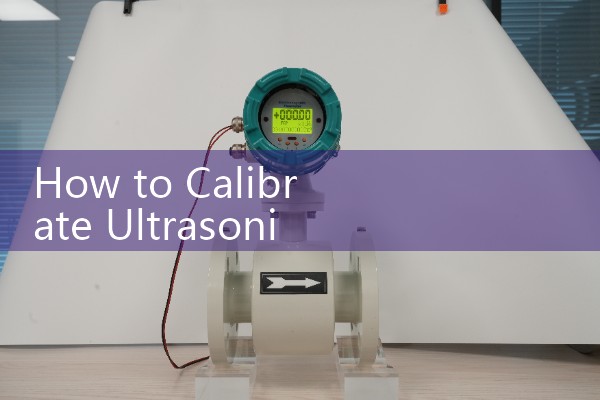
Let the converter calculate the spacing. Mount the transducers. Adjust until signal strength is above 60 percent and the sound speed difference is below 2 percent. Then run a zero calibration with no flow. Close the downstream valve and fill the pipe. Wait until the flow reading is stable. The meter should read within 0.01 m/s of zero. If the reading drifts, check the transducer coupling and pipe wall data.
For a wetted inline ultrasonic meter, you do not need to set transducer spacing. But you still need to select fluid type, temperature range, and output scaling. Set the 4-20 mA HART output and RS485 Modbus if the meter connects to a PLC or SCADA.
Common Site Errors We See in Southeast Asia and Australia
One customer in Vietnam entered DN150 instead of the measured 168.3 mm outer diameter. The error was 3 percent. Another customer in Australia used the default carbon steel value for a 316L stainless steel pipe. The sound speed difference moved the reading by 2 percent. A food plant in Thailand forgot to enter a 4 mm PTFE liner. The meter looked stable but read 1.5 percent high.
Most of these issues are easy to fix. Open the converter menu. Check the pipe outer diameter, wall thickness, pipe material, liner thickness, transducer spacing, and fluid sound speed. One wrong value can offset the whole system. Silver Instruments technical support can review your settings via WhatsApp or WeChat.
Recommended Silver Instruments Ultrasonic Flow Meters
For clean water lines from DN15 to DN50, use the Silver Instruments inline ultrasonic flow meter with 316L wetted parts and 4-20 mA HART output. For larger pipes from DN50 to DN1200, use the clamp-on ultrasonic flow meter with IP67 transducers. It works on carbon steel, stainless steel, PVC, and lined pipes. For desalination and seawater service, specify the seawater sound speed table and 316L mounting hardware.
If your process includes wastewater with solids or aeration, choose the clamp-on meter with Doppler mode or the transit time plus signal diagnostics. Our engineers configure the converter before shipping. You receive a calibration sheet that lists pipe outer diameter, wall thickness, fluid type, temperature, and expected sound speed. The clamp-on transducer set is rated IP67. For hazardous areas, ask our engineers for ATEX Zone 1 certification.
FAQ
What pipe wall data is required for a clamp-on ultrasonic flow meter?
Enter pipe outer diameter, wall thickness, pipe material, and liner material with liner thickness. Do not use nominal pipe size. Measure the actual dimensions.
How accurate must transducer distance be?
For DN50 and smaller, keep the spacing error under 1 mm. For DN100 to DN300, keep it under 2 mm. Use a mounting rail or ruler.
Does fluid temperature affect ultrasonic calibration?
Yes. Fluid sound speed changes with temperature. Enter the normal process temperature. For water at 80 °C use around 1555 m/s. For water at 20 °C use 1482 m/s.
Can one ultrasonic flow meter be used for different pipe sizes?
Yes. A clamp-on meter can be moved between pipes if you enter new pipe outer diameter, wall thickness, and material. The converter recalculates the transducer spacing.
What should I check if the flow reading is unstable?
Check transducer coupling, pipe surface cleanliness, signal strength, and sound speed difference. Also check for air bubbles or solids in the fluid. Then confirm pipe wall data and spacing.
Contact Silver Instruments
Send us your pipe size (DN), wall thickness, material, fluid type, temperature (°C), pressure (bar), and flow range (kg/h or m3/h). We will return a converter setup file and price quote for the right ultrasonic flow meter.
Tel: +86-135-1213-1526
Whatsapp: 86-135-12131526
WeChat: +86 13512131526
Website: flow-meter.com.au